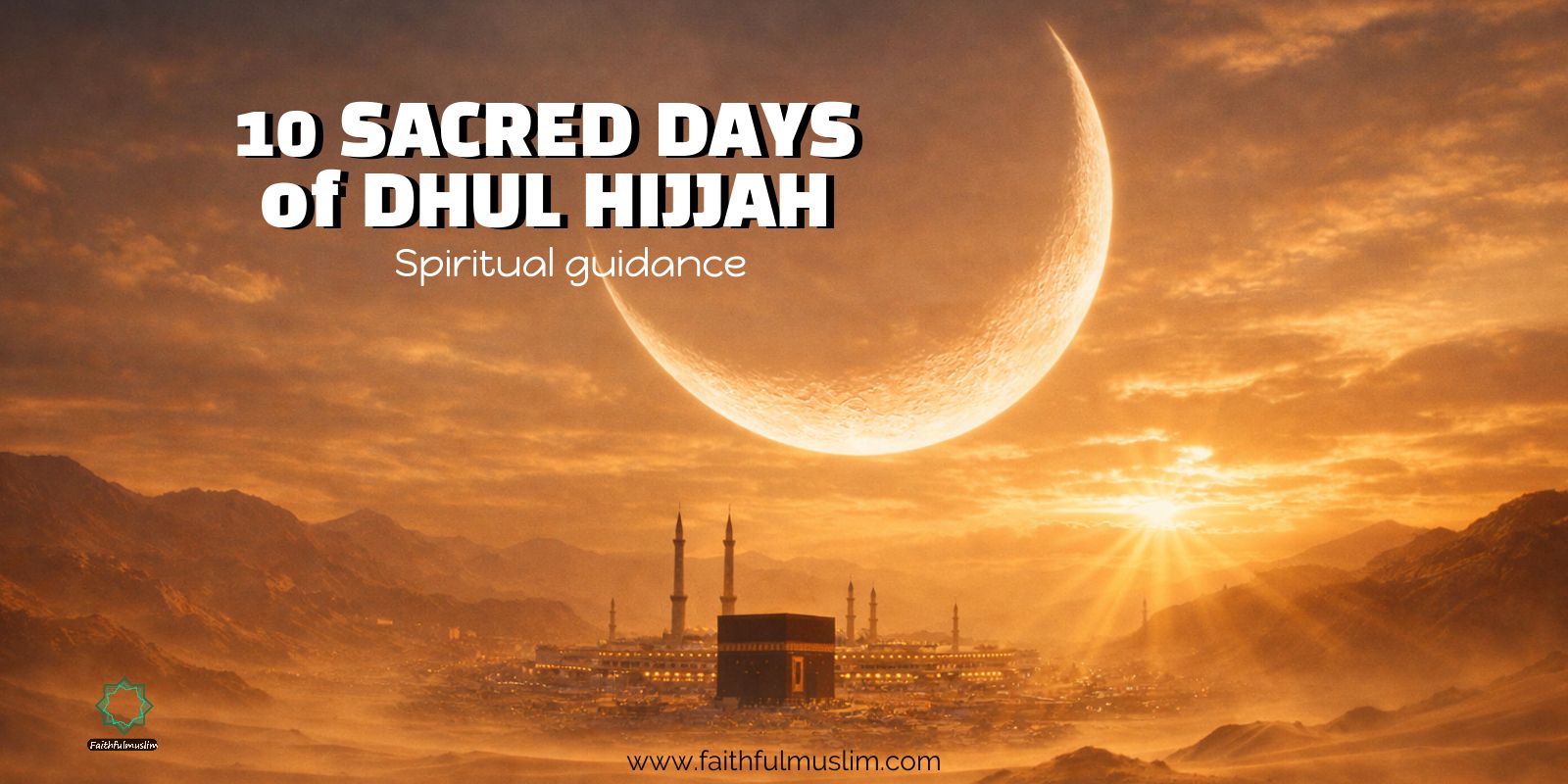
Dhul Hijjah – the 12th and last month of the Hijri Calendar. The name itself means “The Month of the Pilgrimage”. The first ever pilgrimage (Hajj) with all its core rituals took place approximately 4000 Years ago when Prophet Ibrahim (PBUH) was commanded by Allah (SWT). He, along with his son, Prophet Ismail (PBUH), built the Kaaba in the Barren lands of Makkah by Allah’s (SWT) order. This month is often referred to as Ashhur al-Hurum – sacred month in the Hijri calendar. During this time, fighting is historically forbidden, and Muslims are encouraged to increase worship.
Attending Hajj is the best form of supplication, but it is not always possible for everyone. For non-pilgrims, the rewards remain accessible through sincere worship —prayer, fasting, charity, sacrifice, and remembrance. Spiritually, these days represent a divine invitation to renewal. Just as Hajj purifies the pilgrim, home-based worship can cleanse the heart, elevate the soul, and foster enlightenment through detachment from worldly distractions and attachment to the Divine.
The first 10 days of Dhul Hijjah are regarded by scholars as the most blessed and virtuous days of the entire year for reward of righteous deeds. Allah (SWT) Himself swears by these days in the Quran in Surah Al-Fajr verses 1 – 3:
وَٱلۡفَجۡرِ
“By the dawn”
وَلَيَالٍ عَشۡرٖ
“And [by] ten nights”
وَٱلشَّفۡعِ وَٱلۡوَتۡرِ
“And [by] the even [number] and the odd”
(Quran 89: 1 - 3)
In Sahih al-Bukhari, Ibn Abbas (RA) reported that the Prophet (PBUH) said:
“No good deeds are better than what is done in these first ten days of Dhul Hijjah.” When companions asked if not even jihad, he replied, “Not even jihad in the way of Allah (SWT), except for a man who goes out with his life and wealth at risk and returns with nothing.”
(Sahih al-Bukhari 969)
In Islamic tradition, spiritual enlightenment - nearness to Allah (SWT) is not abstract mysticism but the result of consistent and sincere worship that transforms character and consciousness. It involves purifying the nafs (ego), illuminating the heart with the Quran and dhikr, and aligning one’s actions with divine will. The first ten days amplify every effort exponentially, turning ordinary deeds into pathways of profound inner light.
To achieve the highest spiritual enlightenment during the first ten days of Dhul Hijjah while remaining at home, you must treat your local environment as your personal sanctuary. The secret lies in shifting your mindset from passive observation to high-intensity, intentional devotion.
To achieve enlightenment at home, you must create a psychological Ihram – although it will not be a practical solution to withdraw from your day to day activities, we can take certain measures to increase our time for prayer and dhikr. Such as –
Fasting teaches patience, empathy, and control over desires—key to enlightenment. Voluntary fasting during the first 9 days is of immense reward. This is an act of Sunnah. If it is not possible to fast every day, try to fast during the odd (1, 3, 5, 7, 9) days or Mondays and Thursdays.
If still not possible, fasting during the Day of Arafah (9th Dhul Hijjah) – a single day can bring unparalleled spiritual cleansing. Fasting on this particular day expiates sins of the previous and coming year. The Prophet (PBUH) said:
“.....It expiates the sins of the preceding year and the coming year.”
(Sahih Muslim 1162b)
While performing your obligatory prayer on time with focus and humility, also try to pray all the Sunnahs and nafl prayers. Try to sit a little more on the prayer mat and talk with Allah (SWT) wholeheartedly.
If possible, pray Istikhara (after sunrise) and Duha (forenoon).
Tahajjud – to achieve the highest level of spiritual clarity, stand in the quiet hours when Allah (SWT) descends to the lowest heaven. Wake up 30 /45 minutes before the Fajr prayer. Pray 2/4//6 rakahs as your heart desires. Sit in absolute darkness and speak to Allah (SWT) in your native language. Express your deep longing to be at His house, pour out your vulnerabilities, and beg for a complete transformation of your heart.
Dhikr is the cornerstone of these 10 days. Dhikr polishes the heart, removes heedlessness, and invites divine light (nur). While praying needs a specific, fixed time allowance, dhikr can be a continuous process – you can recite dhikr while commuting, at work, or at home while doing house chores.
The Prophet (PBUH) specifically urged much Tahleel, Takbeer, and Tahmeed.
Recite the specific phrase recommended for these days: "Lailaha illalahu wahadahu lasharikalahu lahulmulku walahu hamdu wahuva alakulli shayin kadi" as much as you can.
Recite Full Tashreeq Takbeer from 9th Dhul Hijjah to 13th Dhul Hijjah after every obligatory prayer –
“Allahu Akbar, Allahu Akbar, La ilaha illallah, wallahu Akbar, Allahu Akbar wa lillahil hamd.”
These days are ideal for sincere repentance. Seek forgiveness for past sins, make firm resolutions. Engage in prolonged dua, especially on Arafah. Recite duas from Sunnah, ask for guidance, steadfastness, and the highest stations in Jannah. Cry in sujood—these moments often yield the deepest enlightenment. These days, train the soul for lasting change.
The Quran is a source of healing and guidance. In these 10 days, the rewards multiply, bringing clarity and enlightenment. Recite the Quran after every obligatory prayer and also in the morning and night after finishing all the chores or as much as possible.
The main aim should not be rushing through pages without understanding. But to recite slowly with understanding and deeply reflect on every verse. Pick a specific surah, read one to two verses in Arabic, read its deep translation, if any confusion occurs, take help from available books or online resources, and then sit silently for two minutes asking: “How does this verse demand that I change my lifestyle today?”
If possible, memorize a few new surahs or verses, or review surahs you already know. Aim for a specific portion and memorize whenever you have a small break. If you don’t have time, or in case of girls and women with period, listen to recitations with translation.
Charity not only purifies wealth but also softens the heart and nurtures compassion. Whether you sponsor an orphan, provide food for the hungry, or quietly support a noble cause in secret, every act done sincerely for Allah (SWT) carries immense spiritual value.
During the blessed days of Dhul Hijjah, strive to increase acts of kindness and generosity, no matter how small they may seem. Offer sadaqah regularly, support those in need, care for your neighbors, and spread smiles. These simple yet sincere actions are among the beloved deeds whose rewards are greatly multiplied during these sacred days.
If you have the financial means, perform Qurbani between the 10th and 13th of Dhul Hijjah. It was narrated from Aishah (RA) that the Prophet (PBUH) said:
“The son of Adam does not do any deed on the Day of Sacrifice that is dearer to Allah than shedding blood. It will come on the Day of Resurrection with its horns and cloven hoofs and hair. Its blood is accepted by Allah before it reaches the ground. So be content when you do it.”
(Sunan Ibn Majah 3126)
Symbolically, sacrifice your ego, bad habits, and attachments. Let the act remind you of Prophet Ibrahim’s (AS) submission.
The first ten days of Dhul Hijjah are a mercy from Allah (SWT)—a spiritual summit available to every believer. Whether in a bustling city or quiet homes, you can attain heights of enlightenment through sincere effort. As the days unfold, remember: “There are no days during which righteous deeds are more beloved to Allah than these days.”
Turn everyday moments into worship and witness your soul’s ascent. The gates of Paradise are open wider these days—walk through with devotion. May these days illuminate our hearts, elevate our ranks, and grant us the highest stations.